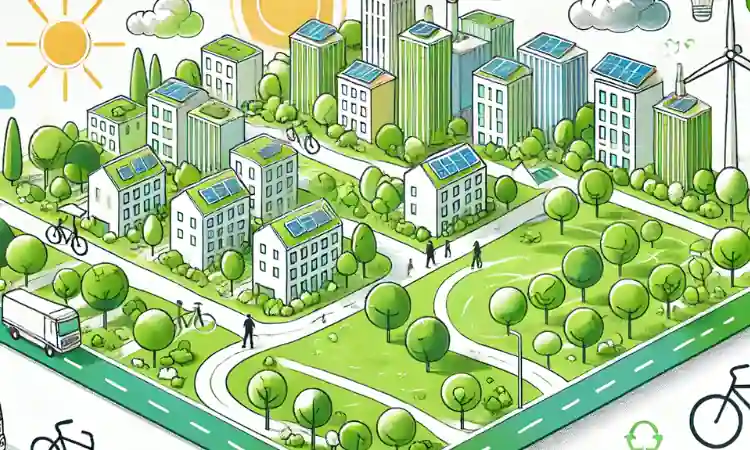
Across Europe, cities are quietly reshaping the way millions of people live, move, and consume. Instead of treating sustainability as a niche concern, urban planners and local governments are weaving eco-friendly choices into the fabric of everyday life. The goal is not to rely solely on individual willpower, but to make the green option the easiest, most comfortable, and often the most affordable one.
Our daily habits are rarely formed in a vacuum; they are responses to the streets we walk, the housing we can afford, and the digital services we use. Whether we decide to cycle or drive, to repair an item or replace it, or to unwind with a film or a game like lightning storm online casino, our choices are nudged by the systems around us. European cities, in their diverse ways, are mastering the art of this subtle, yet powerful, nudge.
Rethinking Mobility: From Car Dominance to Human-Scale Streets
Transport is often the most visible arena where sustainability becomes tangible. Many European cities are deliberately reversing decades of car-centric planning and designing streets for people first. This does not simply mean adding a bike lane and hoping for the best. It means creating dense networks of safe cycling routes, pedestrian zones, and reliable public transport that arrive frequently and on time.
Cities that invest heavily in trams, buses, and metro lines send a clear signal: leaving your car at home is not a sacrifice but a sensible, even pleasant, decision. The presence of integrated ticketing, real-time information, and park-and-ride facilities further lowers the psychological barrier to switching modes. Over time, residents start to see car ownership as optional, especially in compact, well-connected neighbourhoods.
Low-emission zones and congestion charges add another layer of incentive. By attaching a direct cost to polluting or unnecessary car use, city authorities encourage drivers to reconsider their routines. When paired with attractive alternatives, these financial signals feel less like punishment and more like a fair reflection of the environmental impact of different travel choices.
Reimagining Homes and Energy Use
Mobility is only part of the story. A large share of urban emissions comes from buildings and household energy use. European cities are increasingly treating homes, offices, and public buildings as crucial levers in the sustainability transition. This involves both ambitious regulations and practical support.
On the regulatory side, strict energy performance standards for new buildings push developers to adopt efficient insulation, smart heating systems, and passive design techniques. Retrofitting older buildings, often the largest challenge, is encouraged through grants, low-interest loans, and technical advice for homeowners and housing associations.
District heating networks, often powered by renewables or waste heat, are another important piece of the puzzle. Instead of every building having its own inefficient boiler, entire neighborhoods can be heated through a shared, optimized system. Combined with solar panels on rooftops and community-owned energy cooperatives, residents begin to see themselves not only as consumers, but also as active participants in a cleaner energy ecosystem.
Smart meters and detailed energy reports further reinforce eco-friendly habits. When households can clearly see how much energy they use at different times of day, and how that compares with similar homes, they are more likely to adjust thermostats, switch off standby devices, and invest in efficient appliances.
Waste Less, Share More: Circular Urban Economies
Waste management is another area where European cities blend infrastructure with behavioural change. Separate bins for paper, plastics, glass, metal, and organic waste are now a familiar sight in many urban streets and courtyards. But simply providing the bins is not enough; cities also invest in clear signage, public campaigns, and school programs so that sorting becomes automatic rather than confusing.
The more ambitious approach goes beyond recycling and moves toward a circular mindset. Repair cafés, neighbourhood swap events, and reuse centres allow residents to give objects a second life rather than sending them to landfill. Some cities support local social enterprises that refurbish electronics or furniture, combining environmental benefits with job creation and skill-building.
Pay-as-you-throw schemes, where households are charged based on the amount of residual (unsorted) waste they produce, are another subtle nudge. When recycling is free and convenient, but mixed waste is costly, people quickly adapt their habits. Over time, the idea that “waste is a resource in the wrong place” starts to feel less abstract and more like common sense.
Green Spaces, Public Health, and Everyday Well-Being
Sustainable living is not only about carbon footprints; it is also about quality of life. European cities increasingly recognize that parks, urban forests, community gardens, and green roofs are vital urban infrastructure, not decorative extras. These spaces cool overheated neighbourhoods, absorb heavy rainfall, and provide habitats for birds and pollinators.
For residents, they offer something just as precious: a nearby place to walk, play, and breathe. When a park or tree-lined square is a short stroll away, people are more inclined to spend leisure time outdoors rather than in front of screens. Walking and cycling become natural parts of the day rather than forced exercise routines.
Community gardens and allotments are particularly powerful tools for cultural change. By growing herbs, fruits, and vegetables together, neighbours learn about seasonal food, soil health, and biodiversity in a hands-on way. The garden becomes a social hub where sustainable living is not a slogan but a shared, enjoyable practice.
Culture, Education, and the Role of Local Identity
Rules and infrastructure matter, but so does culture. European cities that succeed in fostering eco-friendly habits often tap into local identity and pride. They highlight the city’s historical relationship with its river or coastline, celebrate local food traditions, or showcase its architectural heritage in a new, climate-conscious light.
Schools play a central role, integrating environmental topics into everyday lessons rather than treating them as occasional add-ons. Children learn to measure air quality, calculate the energy output of solar panels, or map safe walking routes to school. These activities plant seeds of awareness that later influence family decisions.
Public campaigns can also be surprisingly effective when they focus on shared values rather than guilt. Messages like “clean air for our children” or “quiet, safe streets for everyone” resonate across political and social divides. When residents feel that sustainable changes reflect their collective aspirations, they are more willing to accept inconveniences and adjust their routines.
Challenges and the Road Ahead
Despite these positive trends, the transition to fully sustainable urban living is far from complete. Social inequality remains a major challenge: eco-friendly housing, transport, and food options must be accessible and affordable for all, not just for wealthier residents. Otherwise, sustainability risks becoming another marker of privilege.
There is also a constant tension between long-term ecological goals and short-term political cycles. Major infrastructure projects require years of investment and can provoke resistance before benefits become visible. Cities that move fastest often do so because they build broad coalitions among citizens, businesses, and civil society, ensuring that sustainability survives changes in political leadership.
Finally, the digital transformation of urban life brings both opportunities and risks. Smart systems can optimize traffic, heating, and waste collection, but they also raise questions about data privacy and control. The challenge for European cities is to harness digital tools in ways that support democracy, fairness, and community well-being, rather than eroding them.
European cities are far from perfect, but they offer a compelling glimpse of how sustainable living can become ordinary rather than exceptional. By aligning infrastructure, regulation, culture, and daily convenience, they show that eco-friendly habits are not just about individual virtue. They are the result of thoughtful, collective design — and they are within reach of any city willing to rethink what urban life is for.